By 3 p.m., the chair starts talking back. A dull ache sets in low on your spine, your neck stiffens, and you catch yourself standing up just to feel normal again. Anyone who's put in a full workday on a rigid task chair knows it. Anyone who's done it from a dining chair they've been "temporarily" using for eight months knows it worse.
So people start eyeing chairs that lean back, tilt, maybe push out a footrest. Which raises a fair question: are reclining office chairs better for work and relaxation, or is the recline just a showroom trick that looks impressive and does nothing for your back? The honest answer is that it depends almost entirely on the chair, and on how you actually use it. Let's get into the parts that matter.
What a reclining office chair actually changes
Here's the thing most people get wrong about sitting: the problem isn't sitting. It's sitting still. Hold one position for hours and the same muscles and discs carry the same load the whole time, and that's what leaves you sore by evening.
A good ergonomic reclining office chair fixes that by letting you move. When you lean back even slightly, you open the angle between your torso and thighs, which shifts pressure off your lower spine. Recline a little to read. Sit up to type. Drop back further to think a problem through. The chair moves with you instead of pinning you to one rigid 90-degree posture.
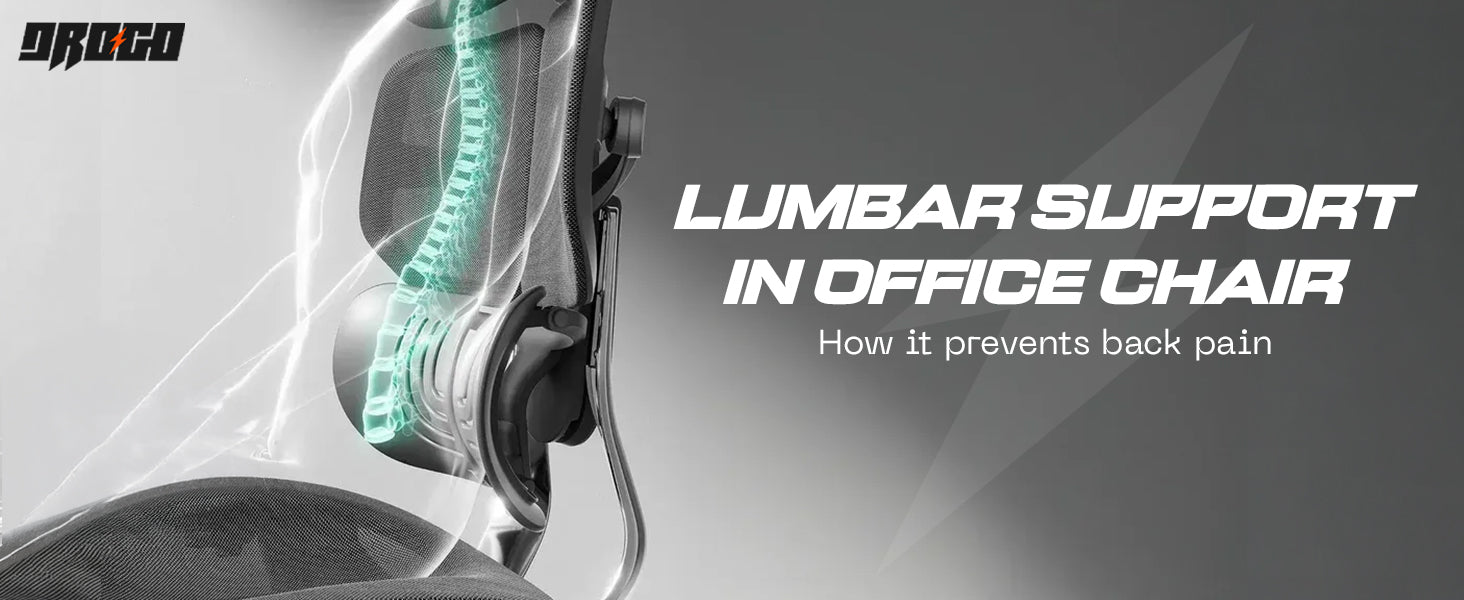
But recline alone isn't the win. Lean back in a chair with no real lumbar support and you don't relax, you slide into a slouch, which is arguably worse than sitting upright. The recline only helps when there's proper support riding along with it. That distinction is the whole game, and it's where cheap and well-built chairs part ways.
The work half: does leaning back help you focus?
This is the worry I hear most. Won't a chair that reclines just make me want to nap instead of work?
Not if it's set up right. For focused desk work you don't want a deep recline at all. You want a gentle one, somewhere around 100 to 110 degrees, with lumbar support that tracks the curve of your back and armrests that actually carry your forearms so your shoulders aren't holding them up all day. That last part matters more than people think. Tense shoulders are half of why your upper back aches by evening.
A deep 150-degree recline? That's for breaks, not for typing an email. And that's fine. So the better question isn't broad, it's narrow: are reclining office chairs better for work and relaxation for someone parked at a desk eight to ten hours a day? Yes, as long as the chair takes the upright end as seriously as it takes the laid-back end. A well-made chair does both. A gimmicky one just tilts.
The relaxation half: the footrest changes everything
Now the other end of the dial. This is where a footrest quietly earns its money.
Push the footrest out, drop the backrest to 140 or 150 degrees, and the exact same chair you were working in becomes an office chair for relaxation. Fifteen minutes between meetings, feet up, eyes shut, no need to migrate to a sofa in another room. A breathable mesh back helps here too, because you're not peeling a sweat-soaked shirt off vinyl after a Bengaluru afternoon. The back stays cool. You get up actually rested.
Is it a full replacement for a recliner sofa? No, and I won't pretend otherwise. A deep-reclining chair takes up more floor space, and the footrest adds bulk you'll notice in a small room. But as a reset button you can hit without leaving your desk, a proper office chair for relaxation is hard to beat. So are reclining office chairs better for work and relaxation once a footrest enters the picture? On the relaxation half, it isn't even close. Most days you don't want a nap. You want ninety seconds of not sitting bolt upright.
Where the Drogo Ergo Flow fits in
If your answer to "are reclining office chairs better for work and relaxation" depends on finding one chair that genuinely handles both ends, the Drogo Ergo Flow is built around exactly this idea.
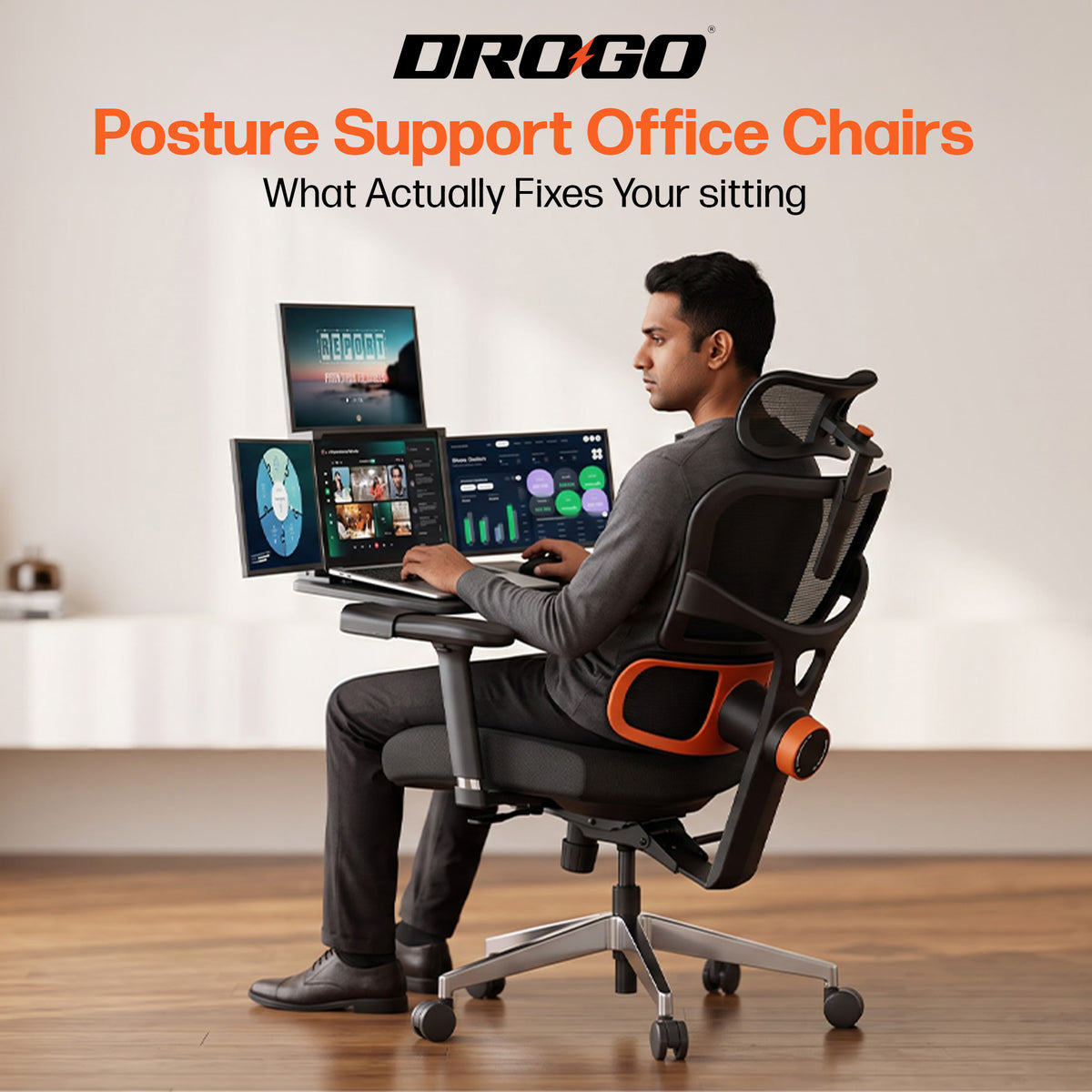
It reclines from 100 all the way to 150 degrees, so the same seat covers upright focus and a full lounge-back. The lumbar support is dynamic. It moves with your spine as you shift, rather than sitting there as a fixed lump of foam. You get a 3D headrest for your neck, 4D wired-control armrests, and seat height that adjusts across a 7 cm range so you can dial in the fit for your own height and desk. The seat and back are full breathable mesh, and the footrest sits on a sturdy five-star base with smooth casters, which turns the same chair into a genuine office chair for relaxation when you want to switch off. Drogo backs it with a 3-year warranty.
It's an ergonomic reclining office chair that doesn't treat the recline as a bolt-on. At around ₹59,990 it sits at the premium end, so it's not the chair for a tight first-job budget. But if you're at a desk most of your waking hours, spreading that cost over three years of daily use reads very differently than the sticker does.
How to choose one that's actually worth the money
So, are reclining office chairs better for work and relaxation than the cheaper fixed chair sitting in your cart right now? Usually but only if you buy on the specs that matter instead of the marketing photos. Plenty of people learn this the hard way, after the ₹6,000 bargain chair starts wobbling and squeaking three months in.
Here's what actually separates a good ergonomic reclining office chair from a dud:
Recline range and a tilt-lock. You want a usable spread from upright work to real lounging, and a lock so it holds the angle you set instead of springing back on you.
Lumbar that follows you. Support that tracks your spine beats a static pad every time. This is the single biggest comfort difference over long days.
4D armrests and seat-height range. Forearms supported, feet flat, knees near 90 degrees. If the seat doesn't adjust to your height, nothing else will feel right.
Mesh or cushion, honestly weighed. Mesh breathes and stays cool; a cushioned seat feels plusher on day one but warms up over long sittings. Neither is "better," it's your climate and preference.
A real footrest and a stable base. A five-star base with quality casters is what keeps a deep recline from feeling tippy when you're using it as an office chair for relaxation.
Weight rating and warranty. Check the rated load. Most quality adult chairs are built for roughly 100 to 125 kg, but confirm the figure on the specific listing. And look for a multi-year warranty on the moving parts, since the gas lift and recline mechanism are what fail first.
Get those right and the chair pays you back every single day. Get them wrong and no amount of recline saves it.
So, is it worth switching?
Are reclining office chairs better for work and relaxation? After enough ten-hour days spent in one, my answer is a qualified yes. For anyone at a desk most of the day, a good ergonomic reclining office chair does two jobs a rigid chair simply can't: it holds you properly upright while you're working, and it lets you switch off when you're not. Just don't buy the recline on its own. Buy the support sitting underneath it the lumbar, the base, the adjustability. That's the part your back remembers.
Want to see the Ergo Flow in real home-office setups? Drogo shares those on Instagram and Facebook.
Frequently Asked Questions
Are reclining office chairs good for your back?
They can be very good, provided they pair the recline with real lumbar support. The benefit comes from movement: shifting between upright and reclined takes steady pressure off your lower spine instead of loading it in one fixed position all day. A recline without support just lets you slouch, so the support matters more than the tilt.
Is a reclining chair good for actual work, or too laid-back?
It's good for work as long as it supports the upright end well. For focused typing you'll sit around 100 to 110 degrees with your lumbar and armrests doing their job, and save the deep recline for breaks. A well-built ergonomic reclining office chair is designed to do both, not force you to pick one.
What recline angle is best for work versus relaxation?
Roughly 100 to 110 degrees for concentrated work, and 130 to 150 degrees when you want to lean back and rest. The point of a reclining chair is that one seat covers that whole span, so you're not stuck at a single angle from morning to evening.
Mesh or cushioned for a reclining office chair?
Mesh wins on airflow and stays cooler through long sittings, which matters a lot in Indian summers. A cushioned seat can feel softer at first but tends to trap heat over time. For a chair you'll sit in for hours, most people are happier on breathable mesh.
How much weight can an ergonomic reclining office chair hold?
It varies by model, but most quality chairs built for adults handle somewhere around 100 to 125 kg. Always check the rated capacity on the specific product page before buying, and pay attention to the base and gas-lift quality, since those carry the load and take the strain when you recline.
Can an office chair for relaxation really replace a recliner sofa?
For short resets at your desk, yes. Feet up, backrest dropped, a few minutes to reset between calls. For a full evening of lounging in front of the TV, a recliner sofa still wins on sheer space and depth. Think of a good office chair for relaxation as the thing that saves you from getting up mid-workday, not as a sofa substitute.
Want to see Drogo chairs in real home-office setups? We share those on Instagram and Facebook.